
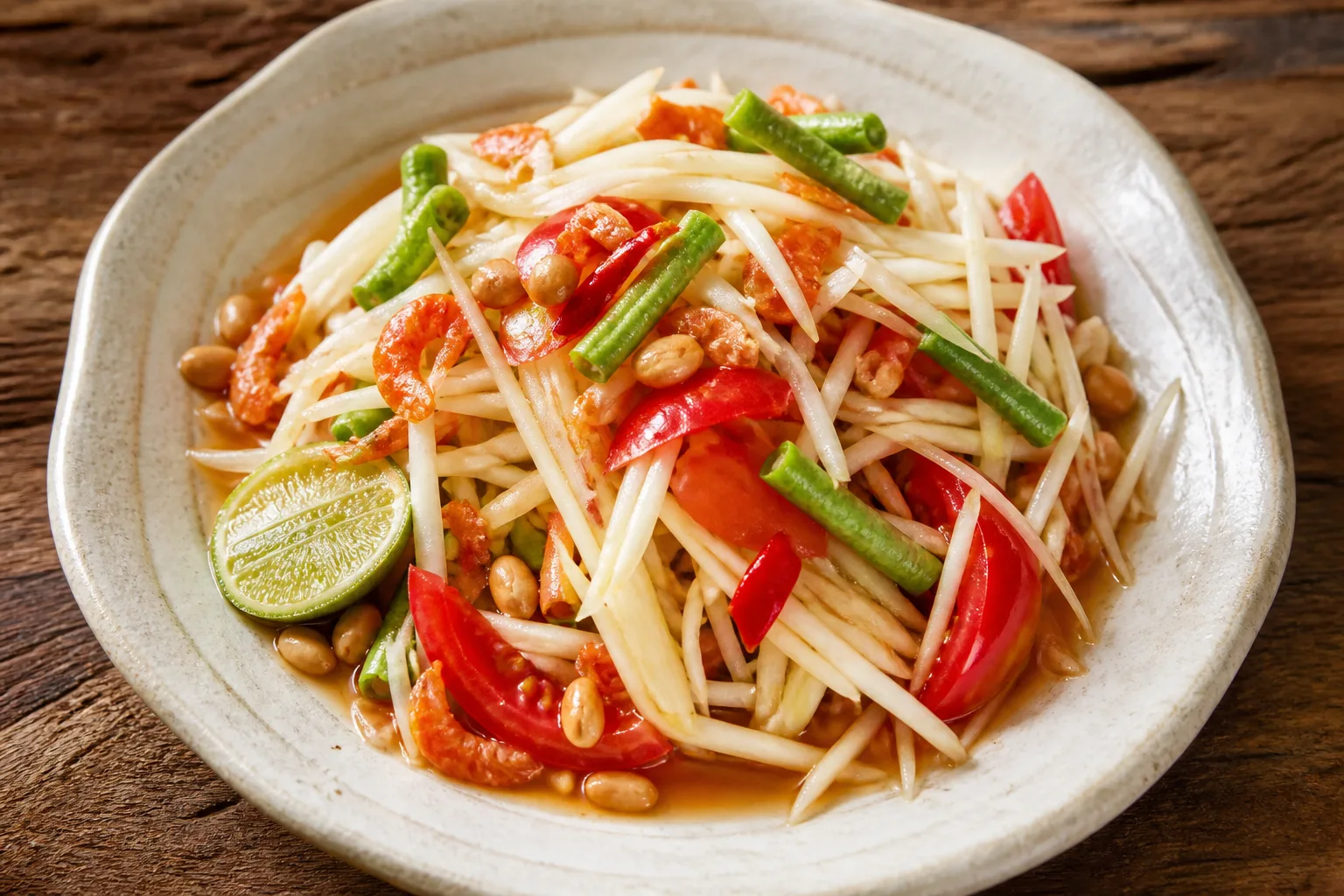


 กุ้งแห้ง dried shrimp
This is a general guide. Always check ingredients and preparation with the restaurant.
- Seafood
- Peanut
Origins
Khao Yam, or Thai-style rice salad, is one of the most cherished regional dishes that embodies the essence of Southern Thai life. More than just a delicious meal, it reflects generations of local wisdom in making the most of simple, readily available ingredients. Centuries ago, coastal communities relied on limited natural resources, leading them to create this refreshing dish using leftover morning rice and seasonal pantry staples—roasted coconut, crushed peanuts, dried shrimp, and fresh tropical fruits like pineapple and slightly unripe mango. The result? A vibrant, cold rice bowl bursting with balanced flavors—sour, spicy, sweet, salty, and rich—that has become an enduring hallmark of Southern Thai cuisine, beloved by many.
Flavor & Texture
Khao Yam delivers a symphony of tastes in every bite. Crunch echoes from the toasted peanuts and coconut with each chew, followed by a bright, tangy punch from carefully prepared nuoc bau (fermented fish sauce). Sweetness lingers gently from ripe pineapple and tender green mango, while finely chopped fresh chilies add a subtle heat that awakens the senses without overwhelming (rated at a mild 1 out of 5). Meanwhile, the crisp, deeply aromatic dried shrimp infuses the dish with a savory depth, transforming this humble rice salad into far more than just a side—it’s a layered sensory journey full of complexity and soul.
Ingredients & Preparation
Begin with freshly cooked jasmine rice, cooled to room temperature. Toss it gently with a dressing made from nuoc bau, a touch of palm sugar, lime juice, and a hint of chili powder—achieving the perfect harmony of sour, salty, sweet, and spicy. Then fold in small cubes of pineapple, thin strips of unripe mango, coarsely ground roasted coconut, crunchy roasted peanuts, and finely crushed dried shrimp. Mix lightly to keep the grains intact. For best results, serve chilled—ideally after a brief rest in the refrigerator—to deepen the flavors and enhance the refreshing quality.
Dietary Notes
Khao Yam suits those who enjoy bold, complex flavors with a playful balance of sweet and sour. Though nuoc bau is used, it's applied sparingly and skillfully blended, so the taste remains harmonious rather than overpowering. Those allergic to nuts can substitute peanuts with roasted pumpkin seeds. For individuals sensitive to the pungent aroma of fermented fish sauce, a mix of fish sauce and lime juice works as a milder alternative—but at the cost of some of the dish’s authentic character.
Pro Tips
Always use freshly steamed rice that’s been cooled properly—never sticky rice or rice that’s too firm, as texture is key to the dish’s delicate mouthfeel. Cut pineapple and mango into bite-sized pieces for consistent flavor in every spoonful. Rinse dried shrimp briefly, then dry and toast them slowly over low heat until crisp and fragrant—this step unlocks their full umami depth. For an extra touch of freshness, garnish with a sprinkle of finely sliced holy basil or coriander just before serving. It elevates the dish with a burst of herbal brightness that leaves a lasting impression.